If you keep backyard chickens long enough, there will almost certainly be a moment when you walk out to the chicken coop, open the nesting boxes, and find… nothing. No fresh eggs. Just an empty nest and a lot of questions.
This is one of the most common concerns among chicken owners, especially those who are new to the hobby. The good news is that when a chicken stops laying, there’s usually a very good reason. Egg laying follows a natural laying cycle, and many factors affect whether a hen lays eggs consistently.
Let’s walk through the top reasons your chickens aren’t laying eggs, what’s normal, and a couple of ways you can support your backyard flock through each situation.

1. Age (Too Young or Too Old)
The age of your chickens matters more than many people realize.
- In general, a young hen will lay her first egg between 4 and 6 months. While some breeds may start laying as early as 4 months, others may take longer, up to 6 or 7 months. New chicks simply need time.
- On the other end of the spectrum are older hens. As hens age, egg production naturally slows. They lay fewer eggs each year, and eventually, some stop laying altogether. This is a normal part of a chicken’s life and not a sign that something is wrong. This is a good thing, even if it’s disappointing. Egg production isn’t the only measure of a healthy hen.
What you can do:
- Be patient with young hens.
- Appreciate older hens as they are still valuable members of your flock! They keep order in the pecking order, teach new chicks the ropes, and often make the best “aunties” in the coop.
- Know that peak production doesn’t last forever.

2. Fewer Daylight Hours (The Most Common Cause)
The most common cause of fewer eggs is shorter days. Hens need about 14–16 hours of daylight for consistent egg production. When daylight hours drop in the winter months, egg laying slows or stops.
What you can do:
- Accept fewer eggs as part of the colder months. This is what I do: I like to let my flock rest in the winter.
- Add supplemental light in the chicken coop if you choose, but know this can stress them out.
- A good rule of thumb is to add light in the morning hours, not at night.
- Make sure the amount of light stays consistent.
Using supplemental light is a personal choice. It can increase the number of eggs, but it also shortens a hen’s natural laying cycle.
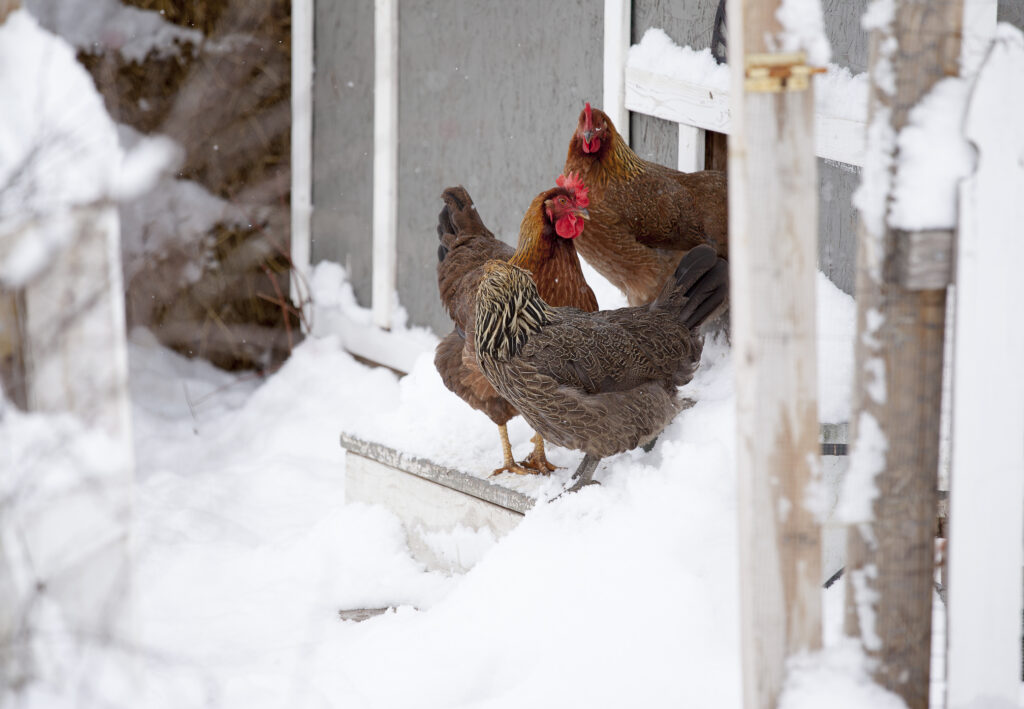
3. Winter and Cold Weather
Cold weather, extreme cold, and short days all work together to pause egg laying. Chickens put energy into staying warm instead of producing eggs.
What you can do:
- Ensure a safe coop that blocks drafts.
- Provide warm water and fresh water daily.
- Increase calories and extra protein.
- Keep bedding dry and nesting material clean.
- Choose winter-hardy breeds.

4. Molting (Those Old Feathers Have to Go)
Molting is when chickens lose old feathers and grow new ones. It takes lots of energy, and egg laying often stops. While molting usually happens in the fall, chickens can molt any time of the year. I have a few that molt in the dead of winter every year, and it always stresses me out.
What you can do:
- Offer additional protein and nutrients.
- Add sunflower seeds or other protein-rich treats in moderation.
- Don’t panic, this is temporary.

5. Stress
Stress is a huge factor in egg laying. Loud noises, predator threats, changes in pecking order, new chickens, illness, or even farm animals nearby can cause stress.
What you can do:
- Reduce predator pressure.
- Keep routines consistent.
- Provide enough square feet per bird.
- Make sure your coop is clean and secure.
- Provide extra nutrition, like chicken superfoods, during times of stress.

6. Presence of Predators
Even if predators never get into the coop, the presence of predators can stop egg laying. Chickens are prey animals. One of my hens was attacked by a fox while free-ranging this summer. She survived, thankfully, but the stress took a toll. She hasn’t laid an egg in about three months.
What you can do:
- Reinforce the chicken coop by using hardware cloth, not chicken wire.
- Limit free-range time.
- Check locks and latches regularly.
Here are 13 ways you can protect your chickens from predators.
7. Extreme Heat
Just like extreme cold, extreme heat, and warm temperatures can cause chickens to stop laying eggs.
What you can do:
- Provide shade.
- Offer clean water and fresh water at all times.
- Use electrolytes during the summer months.
- Encourage free ranging in shaded areas if safe.
- Provide a dust bath in a shaded area.
- Choose heat-tolerant breeds.

8. Broody Hen
A broody hen wants to hatch eggs, not lay them. Once broody, egg laying pauses.
What you can do:
- Break broodiness by removing access to nesting boxes.
- Increase airflow.
- Let her sit it out if she’s healthy.
To learn more about how you can help a broody hen, check out this article.

9. Illness or Injury
A healthy hen lays eggs. Illness, internal issues, or injuries can stop egg laying quickly.
What you can do:
- Watch behavior closely.
- Check for changes in appetite or energy.
- Isolate if needed.
- Consult a poultry vet if symptoms persist.

10. Diet Issues
A balanced diet is essential. Without essential nutrients, egg production suffers.
What you can do:
- Feed a complete layer feed.
- Offer oyster shells or eggshells for strong eggshells.
- Limit treats.
- Ensure clean water is always available.
Here is a complete guide to feeding your flock.

11. Lack of Protein
Eggs require protein. During molting, cold weather, or recovery, hens may need more.
What you can do:
- Add extra protein temporarily. I like to make my chickens’ flock block when they need extra protein and nutrients. You can grab that recipe here.
- Sunflower seeds are a great option.
- Avoid overdoing it long-term.

12. Breed Differences
Not all chicken breeds lay the same number of eggs.
- Rhode Island Reds and Plymouth Rocks are good layers.
- Silkies, ornamental breeds, and some dual-purpose breeds lay fewer eggs.
What you can do:
- Set realistic expectations.
- Choose breeds based on goals.
- Appreciate personality over production.

13. Free Ranging and Hidden Eggs
Free-ranging chickens are notorious for laying eggs in secret spots. When my chickens are out free ranging, and I hear the egg song coming from anywhere other than the coop, I know it’s time for an egg hunt.
What you can do:
- Check bushes, tall grass, and barns.
- Encourage the use of nesting boxes with fresh nesting material.
- Wait to free range until later in the day, after they have all laid.

14. Changes in the Pecking Order
New chickens or flock changes disrupt laying patterns.
What you can do:
- Allow time for adjustment.
- Ensure enough space and multiple nesting boxes.
- Provide extra nutrients to help support them.
15. New Environment
Moving coops, relocating birds, or introducing new chickens can pause egg laying.
What you can do:
- Give it time.
- Keep routines steady.
- Offer extra protein while they adjust.

16. Over-Mating
Sometimes hens slow egg laying due to flock dynamics or rooster stress.
What you can do:
- Monitor rooster behavior.
- Provide hens with a chicken saddle.
- Isolate the rooster if needed.

17. Seasonal Laying Cycles
Egg laying ebbs and flows throughout the year.
What you can do:
- Plan egg-heavy recipes for the summer months.
- Preserve eggs when production is high. Here are a few ways to help you preserve your eggs long term.

18. Some Hens Just Never Lay Eggs
Yes, there is such a thing as a hen that never lays. And that’s okay. My Silkie, Little Bit, is four years old and has never laid a single egg. Not one. And that’s okay. Some hens just never lay eggs, and that’s part of a chicken’s life.
A chicken doesn’t owe us eggs. Sometimes they’re just part of the backyard flock for companionship, bug control, or joy.
Final Thoughts
If your chicken stops laying, it doesn’t mean you’re doing something wrong. In most cases, it’s completely normal. The best way to support egg laying is focusing on a healthy hen, a clean coop, fresh water, a balanced diet, and realistic expectations.
Eggs will come when it’s a good time for your hens. And when they don’t, that’s okay too.
What questions do you have? Let me know in the comments!
Related Posts:
When do Chickens Start Laying Eggs?
Understanding the Chicken Pecking Order
Seasonal Care and Coop Maintenance
How to Sprout Grains for Chicken Fodder
Sign up for friendly chicken-keeping tips, seasonal care guides, and simple ways to create more calm in your days on the farm or in your backyard.